
 By admin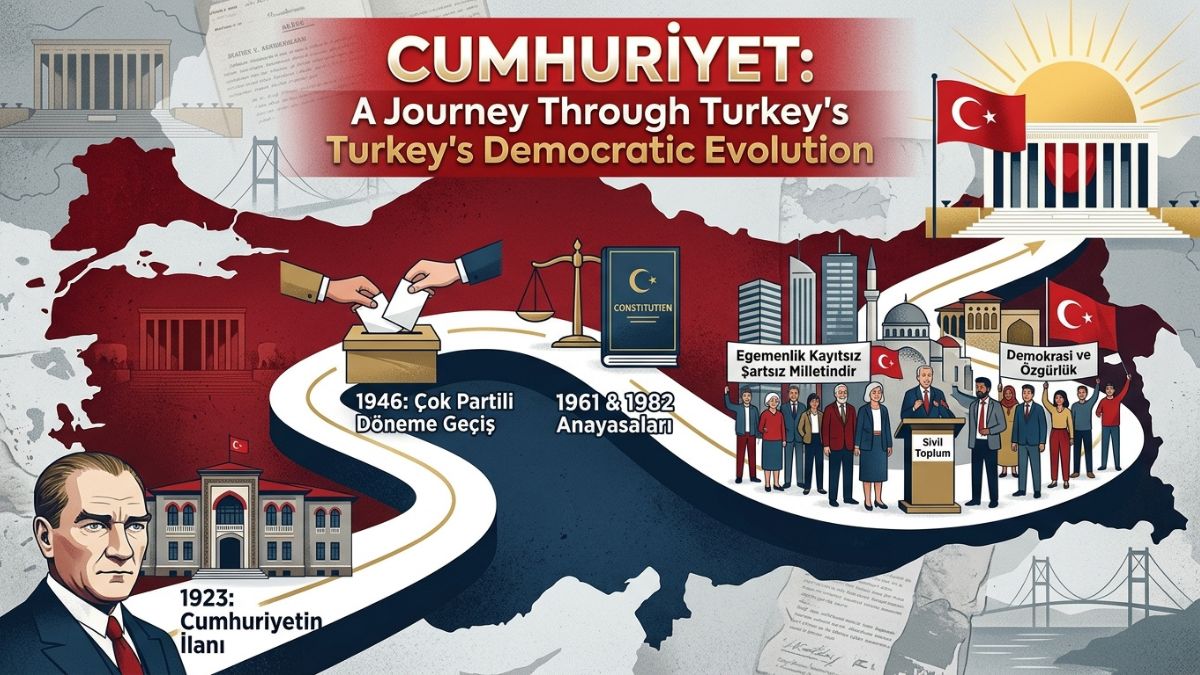
Turkey’s journey towards democracy is a captivating tale of resilience, reform, and the relentless pursuit of progress. Cumhuritey At the heart of this narrative lies Cumhuriyet the Republic that emerged from the ashes of an empire. It symbolizes not just a political shift but also a transformation in national identity and values.
As we delve into this rich history, we’ll explore key figures like Mustafa Kemal Atatürk, whose vision shaped modern Turkey. We’ll examine pivotal moments such as World War II’s influence on politics and shifts between democratic ideals and authoritarianism.
Join us as we traverse through time to uncover how each chapter has played a significant role in molding Turkey’s current political landscape an ongoing story filled with challenges and triumphs that continues to evolve today.
The Rise of Mustafa Kemal Atatürk and the Establishment of a New Republic
Mustafa Kemal Atatürk emerged as a pivotal figure in Turkey’s journey towards democracy. Following the collapse of the Ottoman Empire, he envisioned a modern nation-state grounded in secularism and nationalism. In 1923, he proclaimed the Republic of Turkey, marking a significant shift from centuries of imperial rule to democratic governance. His reforms transformed Turkish society, focusing on education, women’s rights, and economic development.
Atatürk’s dedication to modernization was evident through radical changes such as adopting the Latin alphabet and establishing civil law codes. Cumhuritey He sought not only political change but also cultural renewal. His vision resonated with many citizens eager for progress while simultaneously creating tensions among traditionalists who resisted rapid transformations. Atatürk’s legacy remains deeply interwoven with Turkey’s identity as it navigates its path forward in an evolving world.
The Impact of World War II on Turkey’s Political Landscape
World War II was a turning point for many nations, and Turkey was no exception. As the war raged on in Europe, Turkey navigated a complex political landscape. Cumhuritey Initially neutral, it found itself caught between powerful forces. The conflict highlighted vulnerabilities within the Turkish state. Economic pressures mounted as resources became scarce. Cumhuritey The government faced mounting challenges to maintain stability amid rising inflation and social unrest.
Turkey’s foreign policy shifted during this period, leaning towards the West. With growing ties to the United States and Britain post-war, economic aid programs began to emerge. This marked a pivotal moment in aligning with democratic ideals. Domestically, wartime tensions spurred debates about governance and civil liberties. Citizens began demanding more from their leaders while highlighting issues of authoritarianism that had persisted since Atatürk’s time. Cumhuritey These dynamics laid crucial groundwork for future democratic developments in Turkey’s journey toward Cumhuritey.
İnönü Era: Democracy and Authoritarianism in Flux
The İnönü Era marked a pivotal chapter in Turkey’s journey toward democracy. İsmet İnönü, the second president, led the nation through turbulent times following Atatürk’s death. His leadership was characterized by balancing democratic ideals and authoritarian tendencies. During this period, political opposition began to stir. The single-party system faced pressure as various groups sought representation. People craved more voice and freedom; however, İnönü often resorted to strict measures to maintain stability.
Yet, there were moments of hope for progress. The establishment of the first multi-party elections in 1946 hinted at a shift toward greater democratic engagement. Citizens increasingly yearned for participation and transparency. Still, challenges loomed large throughout his presidency. Tensions between maintaining order and granting freedoms created an uneasy atmosphere that would shape future political dynamics in Turkey deeply.
The Military Coup in 1960 and its Effects on Democracy
The military coup of 1960 marked a pivotal moment in Turkey’s journey towards democracy. It was a response to growing political instability and social unrest. The military intervened, citing the need to restore order. Following the coup, Prime Minister Adnan Menderes was overthrown and later executed. This action sent shockwaves through the nation. Many saw it as a betrayal of democratic principles.
The aftermath led to significant changes in governance. A new constitution emerged in 1961, aiming to balance power and prevent future authoritarian rule. Political parties were re-established, fostering an environment for debate and dissent. Yet, this period also highlighted the fragility of democracy in Turkey. Trust between civilians and military eroded further, creating lingering tensions that would influence future politics profoundly. The legacy of this event continues to shape discussions about governance in Turkey today.
Transition to Multi-Party System and the Rise of Turgut Özal
The 1980s marked a pivotal moment in Turkey’s political history. The transition to a multi-party system began reshaping the landscape, introducing dynamic changes that would redefine governance. Turgut Özal emerged as a key figure during this transformative period. He was not just an economist but also a visionary leader who understood the pulse of modern Turkey. His rise coincided with significant economic reforms aimed at liberalizing the economy.
Özal championed policies that encouraged foreign investment and promoted privatization. These actions resulted in substantial growth and development, steering Turkey towards modernization. His leadership style differed from his predecessors; he embraced democracy while navigating complex political waters. This era saw increased public participation in politics, enhancing citizens’ voices across the nation. The shift to multiple parties invigorated Turkish democracy, showcasing diverse ideologies and perspectives for voters to consider. The atmosphere buzzed with energy as new political forces vied for influence.
Challenges to Democracy in Modern
Turkey’s modern democracy faces a complex web of challenges. Political polarization is rampant, dividing society into factions that struggle to find common ground. This fragmentation complicates consensus-building and effective governance. Media freedom has also come under pressure. Journalists face censorship and intimidation, stifling diverse voices in public discourse. A vibrant press is essential for democracy, yet many outlets operate under constraints that limit their ability to report freely.
Civil liberties are increasingly at stake as well. Restrictions on peaceful assembly and dissent raise concerns about the health of democratic practices. Citizens often feel discouraged from engaging in political activities due to fear of repercussions. Cumhuritey Additionally, economic instability poses a significant threat to democratic structures. High inflation rates and unemployment can lead citizens to prioritize stability over freedoms, creating an environment where authoritarian solutions appear more appealing than idealistic democratic principles.
Conclusion:
Turkey’s journey through democratic evolution has been anything but linear. From the visionary leadership of Mustafa Kemal Atatürk, who laid the foundation for modern governance, to the fluctuating dynamics during World War II and beyond, each era has shaped its political landscape profoundly. The İnönü years saw a struggle between democracy and authoritarianism, while subsequent military coups tested the resilience of civil institutions.
The transition to a multi-party system marked a significant shift in Turkey’s approach to governance. Turgut Özal emerged as a pivotal figure during this time, promoting economic reforms that encouraged individual freedoms alongside democratic principles.